
More importantly, however, the book blurbs and the discussions that followed served as excellent book talks. After each lesson, I saw students quietly picking up many of the books on the slides. I pretended not to look, of course.

More importantly, however, the book blurbs and the discussions that followed served as excellent book talks. After each lesson, I saw students quietly picking up many of the books on the slides. I pretended not to look, of course.
I didn’t give them the definitions in the beginning this time. This allowed them to use the learning from the last two lessons and hypothesise what the differences ought to be. The book blurbs on the slides, much like last time, were our opportunities to discuss, argue, ask questions and share our confusion. Towards the end, when clarity was just within reach, I provided the definitions.
My main aim in this lesson is to get students comfortable with identifying boundary conditions of a genre in the face of ambiguity.
In this series, I share one such set of 5 lessons that help students identify genres more accurately. The lessons are:
L1: Prior Knowledge Check
L2: Genre – Meaning and Types
L3: Realistic Fiction vs. Fantasy vs. Historical Fiction
L4: Fantasy vs. Science Fiction
L5: Science Fiction vs. Dystopia.
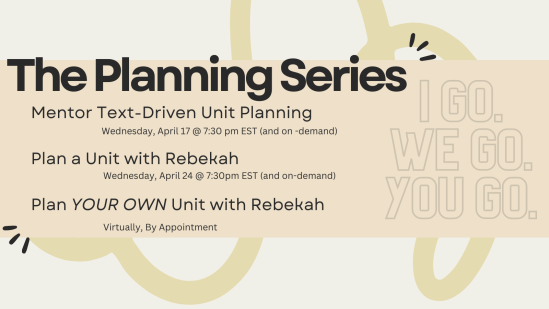
Hey there, I’m introducing a brand new professional development series this spring that I think you’ll love! This three-session series helps you learn a process that will quickly and effectively plan writing units that are rooted in mentor texts. I’m MOST excited about session three — a one-on-one, by-appointment session where we plan a unit […]

When students do not think through the point of entry into their story, they pick the first thing that occurs to them, and this almost always means that the memoir gets narrated chronologically; any potential for flashbacks or other transitions in time is unexplored.

Nancie Atwell calls theme “the chilliest mind Popsicle” of all the writing lessons that young writers need to learn, and I couldn’t agree more. (Atwell, 2015, 101) Theme is one of the toughest lessons I have had to learn to teach in both reading and writing and by the time I did, I not only […]
Thinking about our writing, big picture, helps us to think about who and how we want to be as people, and as we the people.

I’m very happy that my idea of creating Embarrassment Free Zones resonated with many teachers and students. My goal in this post is to establish that there are situations when Free Zones won’t work. Yes, that’s right.
In his 1995 work, The Demon-Haunted World: Science as a Candle in the Dark, astrophysicist Carl Sagan wrote a sentence that would be uttered in classrooms around the world for decades to come: “there’s no such thing as a dumb question.” We’ll assume, of course, that Sagan is excluding the students in your class who […]
 moving writers