

Standards and pacing guides dictate the modes of writing students need to do in a given school year: informational writing, persuasive writing, argumentative writing, narrative writing. But these documents aren’t as good at sharing what that should actually look like. That — what modes of writing look like in the wild — is genre.
The fact that standards and pacing guides don’t suggest genres leaves teachers at an impasse, and, more often than not, teachers just kind of invent something they think might fit the bill:
“Okay, kids, we are going to write a persuasive essay about … dress code.”
“Alright, it’s time for our informational writing which is a research paper!”
We teachers are rarely inspired by these assignments. And, of course, neither are students.
It takes a lot (a lot) of reading to start to see where these kinds of writing live in the wild, and, of course, it’s rarely pure. A persuasive open letter probably also incorporates elements of narrative and some information. Even a personal essay pulls in research.

So, how what kind of writing should you teach in your informational writing unit? And how can you ensure that students are just doing the same piece of informational writing year after year after year?
I’ve made you an 8-page guide that includes:
- a five-step genre continuum of informational writing
- ideas for using this continuum in your own classroom, with your grade-level team, and with your entire English department
- a description of each genre
- recommendations for when each genre works best with students
- three mentor texts for the genre ready to take into your classroom
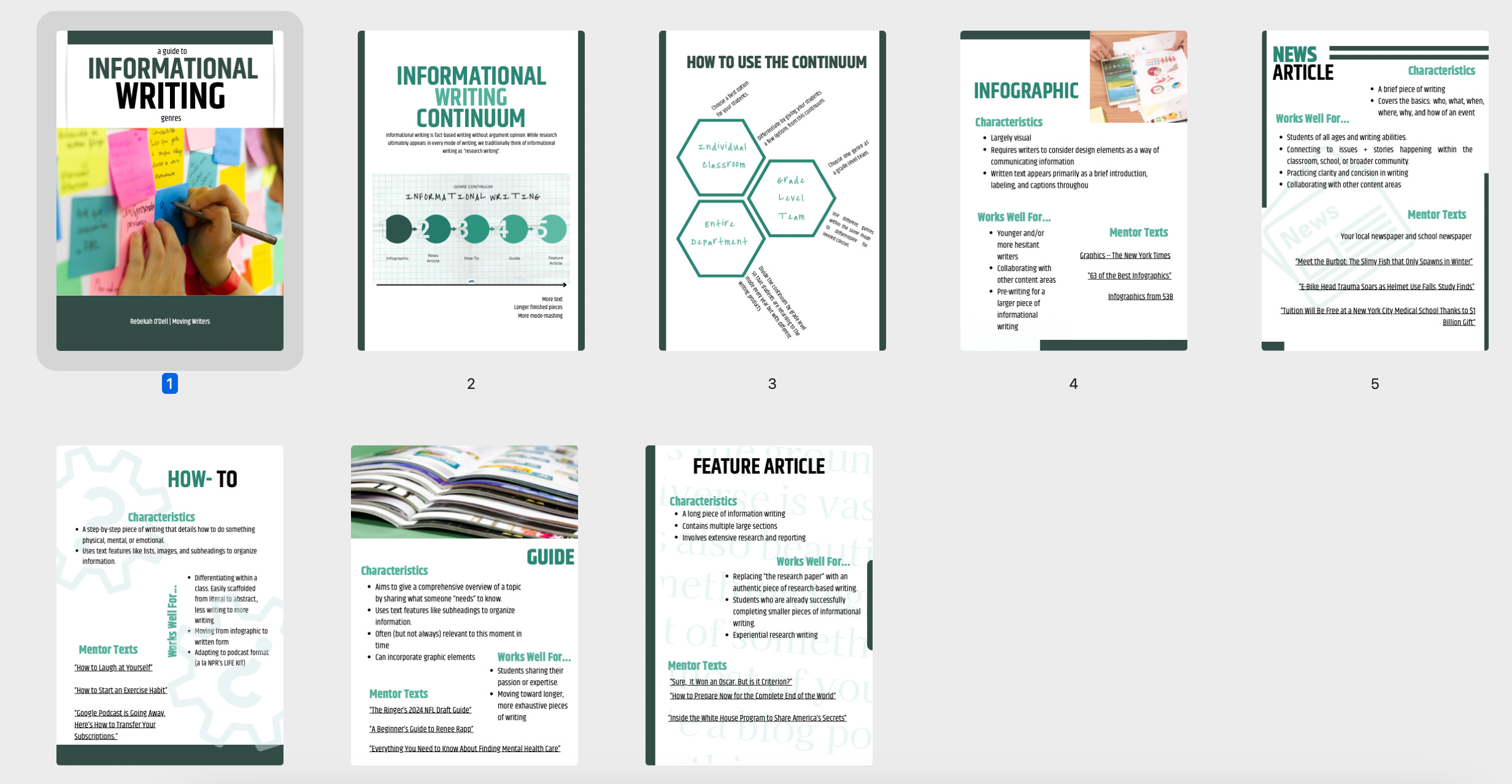
Members of the Moving Writers Community received this for free this week. You can get a copy there OR you can get the guide on its own here!
 moving writers
1 Comment