
How The American Teenager project got my students talking and helped me get to know them better.
About this time eight years ago I was searching for help.
I had entered the world of education with a parade, waving a banner saying, “Look out students, this teacher is going to change your life!” It didn’t even take a month for that parade to turn into a daily, solitary march into my classroom, feet dragging, waving a white flag of surrender.
So, I was looking for help. I was looking for inspiration. I was looking for a friend and I found the Moving Writers blog. And my whole attitude and philosophy on teaching changed. (I’m not being dramatic, although I do understand if you are rolling your eyes especially after my “parade”.)
Teaching was way more complicated than what I had anticipated, but after reading and using the lessons and ideas that Rebekah and Alison shared on their blog, I realized that it didn’t have to be complicated at all.
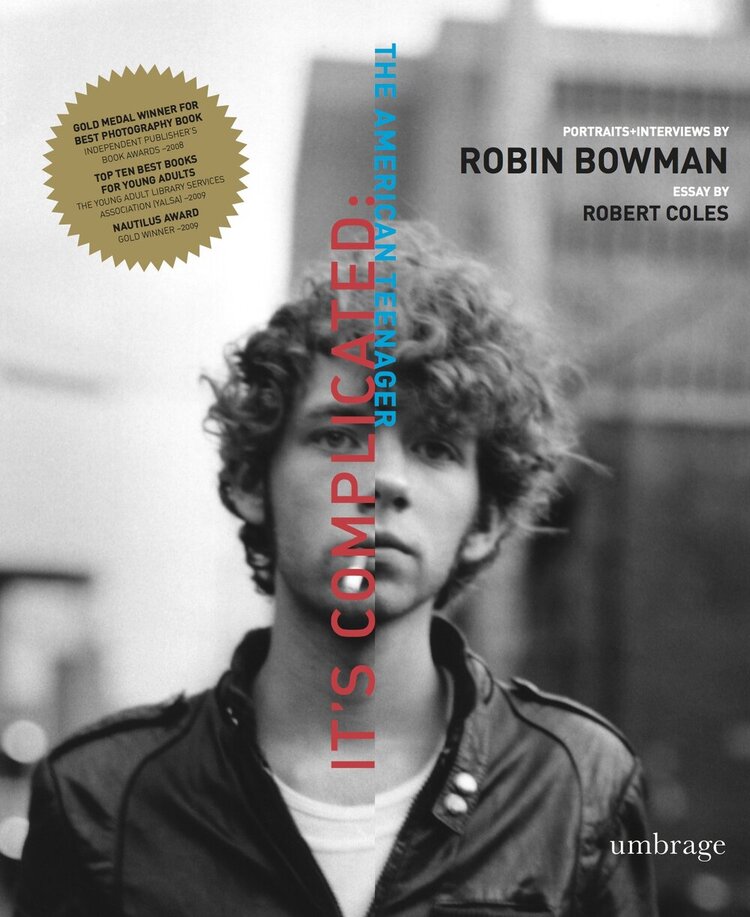
One of my favorite ideas that I took away all those years ago (and one that I just had my students complete last week for the eighth year in a row) is THE AMERICAN TEENAGER project.
Photographer Robin Bowman went all over the United States (almost 20 years ago) talking and photographing teenagers. She asked them all the same 20 questions and then took their picture in black and white. She then edited the interviews to keep the most compelling responses and published a selection of the interviews/pictures in a book titled, It’s Complicated – The American Teenager.
This was the “life-saver” I needed. This project requires very little from the teacher and has students doing all the work. And continues to be the number one requested project that my sophomores say I should keep for the incoming class. In my classroom we use mentor text to elevate our own writing craft. Teaching sophomores is easy in some ways because they come to me already having a writing foundation. What makes it complicated is that I need to help them elevate their writing craft and help them identify who they are through their writing. So in my class we study mentor texts weekly. Students examine and identify the moves the writers are making, so they can use the same moves in their own writing. The American Teenager project really is the “ah-ha” moment for most of my students to understand what we do in my class and why we do it.
Here’s what it looks like in my classroom…
- Students spend a day reading a selection of interviews from the book making noticings about the interviews. Noticings like: there are no questions, it’s written in 1st person P.O.V, etc. (While I think the book is well-worth purchasing, you can still do this by accessing her online resources which are linked here.)
- At the end of the first day or beginning of the second day, students are then given 10 questions (from the original 20) and they select the questions they would feel most comfortable answering when interviewed. This really could be an exit ticket or a warm up activity.
- I have found that when I pair the students with classmates they don’t know very well, the interviews go much deeper and the quality is much better versus if they get to select who they want to interview. So I usually have students already paired up before the second day.
- Students record their interviews either using their phones or Flip. They then spend a day listening and typing up their interviews in a google slide. Students also take each other’s pictures and insert those onto the slides. The interview process and typing up the interviews takes 2 full classroom days (if you have 48 min periods, like I do).
The last thing I do once all interviews have been turned in, is to print them off and hang them up around my classroom – it is my favorite classroom decoration.
How to Use The Materials
Interviews and Questions – Use the interviews as mentor texts for students to refer back to, which is why I usually only make a class set. Feel free to change the questions or remove some, whatever makes it work for you and your students.
I teach Emergent Bilingual students, 504 students, and have an Inclusion Support teacher every day in all of my periods – all of these students were able to do this project. Some of my students, though, did prefer to interview themselves, which was totally fine. I will say using this graphic organizer did help many of my students in these classes.
Here is the google slide template that my students used this year. In the past, I did get the pictures developed. However, due to my growing number of students and class sizes, the google slide template has been a money-saver and has helped with my students who require modified instruction.
Want more?
Here is the link to the original post
I hope this project can make at least one of your weeks in the coming months a little less complicated.
Just another teacher in the classroom, Ashley Anderson
Ashley Anderson is a 10th grade English teacher at Dickinson High School in Dickinson, TX. She is in her eighth year of teaching. Before entering education, Ashley was a Captain in the United States Air Force and managed marketing and communications for several private aviation companies. She loves cold coffee, doing sudoku, and cheering on her Gators (students) at all of their extracurricular activities. She lives with her husband, Chad (who is also a 10 grade english teacher and on her team at DHS), and her two daughters Avery (#AveryMonster) and Audrey (#BabyBop). Ashley feels blessed every day to be part of a profession with so much passion and commitment. She is excited and humbled to be part of the MovingWriters team.
What other projects or lessons are you doing in your classrooms that are your “tried and true” and make everything less complicated? You can connect with me on Twitter @Teaching_IsLife or on Facebook at facebook.com/movingwriters.

