
Several years ago, a student candidly expressed frustration with how the climate crisis was discussed at our school: “Teachers have us read an article or a poem that kick up all these feelings of despair. And…that’s it. That’s the end. Instead of just making me sad and angry, why don’t they give us tools to actually problem-solve?”
Since that conversation, I’ve never stopped thinking about the call to action that student voiced. Unless you work at a green school or at a school where leaders are committed sustainability champions, it can be extremely challenging for educators to integrate climate stewardship into curriculum beyond the one-off Earth Day lesson. I know first-hand how fatiguing it can be to mentally toggle between disparate PD topics and how little time is available for collaborating on lesson design that works best with transdisciplinary input.
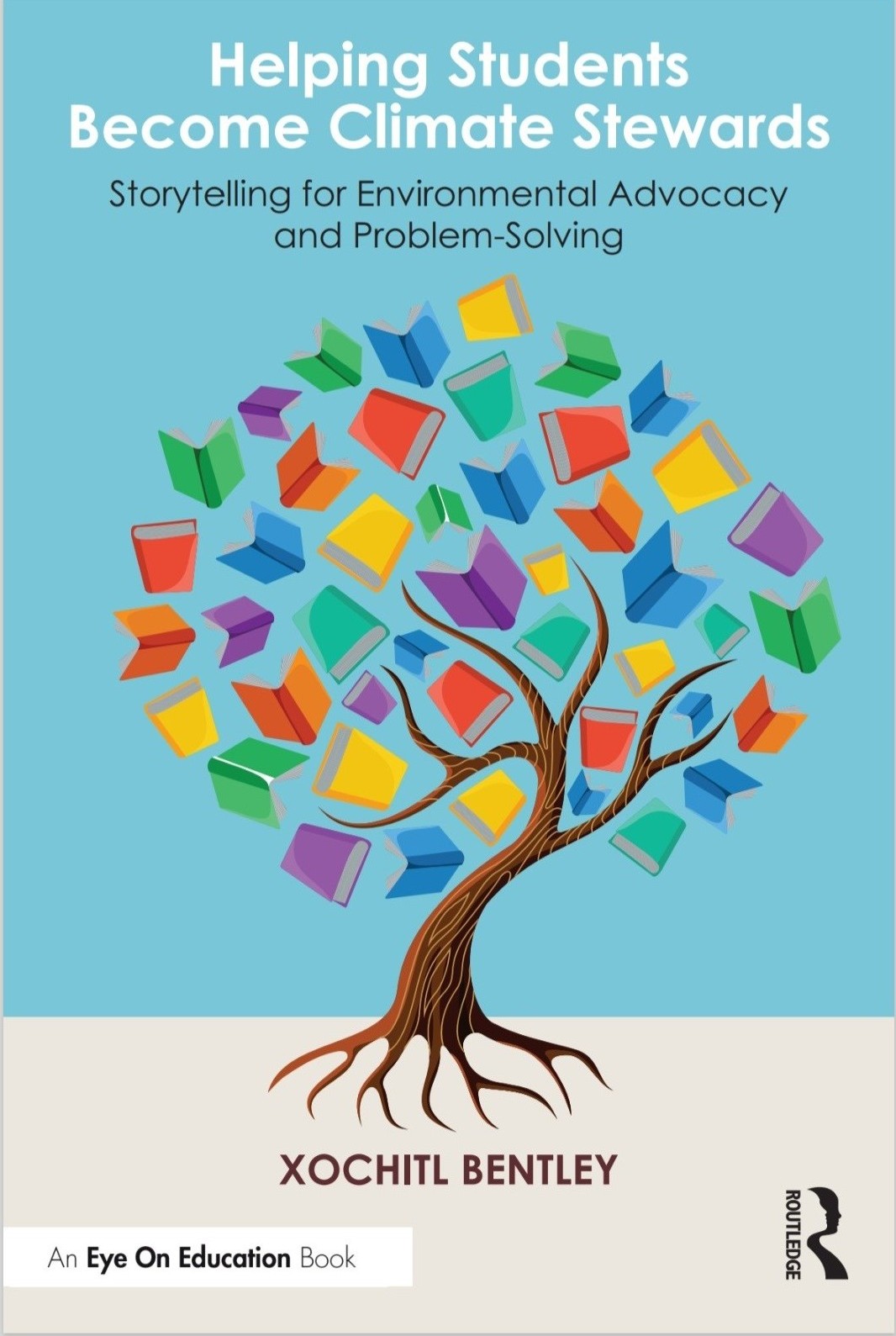
That’s why I wrote my book, Helping Students Become Climate Stewards: Storytelling for Environmental Advocacy and Problem-Solving. I outline storytelling stances that offer a framework for building a climate stewardship curriculum. Environmental problem-solving depends on civic action that offers counterstories to our current unsustainable trajectory. Tackling barriers to participating in solutions means addressing underlying mindsets and interrogating narrative framing in the information landscape.
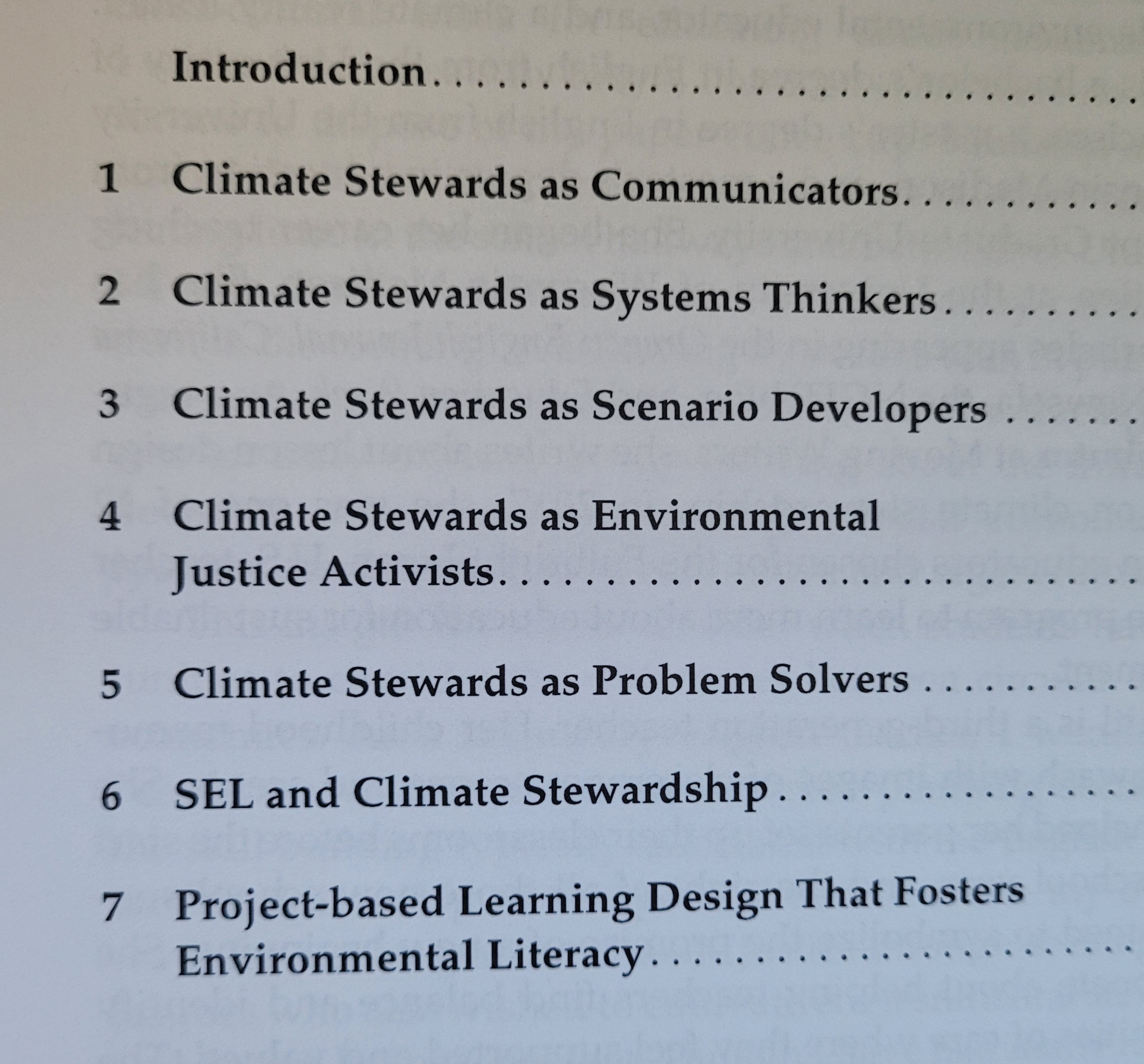
Chapter by chapter, this book will offer ideas for how storytelling can build the capacity for various roles within the realm of climate stewardship. My lesson ideas for video documentaries, podcasts, comic storyboards, letter proposals, advocacy campaigns, and mini-zines are all classroom-tested. Student samples abound so you can gain a sense of the range of writing types that can be practiced when consciously embedding opportunities for climate storytelling.
I am deeply grateful to Rebekah O’Dell and Allison Marchetti for the inspiration they provide in their books on mentor texts. Their ideas have greatly informed the suggestions I make for exposing students to powerful texts for climate stewardship. Modeling how we identify mentor texts for communicating as climate stewards empowers students to locate those “just right” texts on their own and fosters adeptness at naming the craft moves model communicators are using. Helping our students articulate the best ideas for minimizing harmful human impacts means we don’t just stop at raising awareness. We push for ambitious, systemic change.
If you want to join an upcoming virtual book club discussion of this book, you can register here. If your school or district is looking to organize their own work with the book or interested in hosting a speaker about lesson designing about climate stewardship, please reach out to me via my website or on Bluesky.
-Xochitl
 moving writers