
Every year, a parent comes to me (or, more likely, their child’s advisor or an administrator) with concerns that students aren’t writing pieces that are long enough. Where are the 10-page literary essays? The 20-page research papers? They are interested in quantity. The kind of volume they think will be expected of their child in high school.
And they aren’t wrong. Increased quantity and volume of writing will be expected of them in high school. And even MORE in college. But I’m a firm believer that we have to teach quality before we teach quantity. After all, what’s the point of a student writing 10 bad pages of literary analysis before they can write one strong analytical paragraph?
Tell me if you’ve ever seen something like this from a student:
“Maddie is a 12 year old who just wants to hang out with her friends. She and her best friends Emma and Ashanti make a plan to go to her grandparents second house and they stay there for the night with her 2 friends. She tells her dad that she’s with her mom and tells her mom she’s with her dad. The plan is all set up and going well until 6:40 pm when Emma texted the group chat saying Ashanti threw up and Emma is now busy. Maddie still decides to sleepover at her grandparents place. She stayes up and watches movies then casually drifts off. Text zooming in at 1 am saying she needs to evacuate, with unread messages from her mom and dad she starts to panic. Its 7am and she walks outside and the whole town is missing, no people, no cars, no phones buzzing, no loud music, absolutely nothing. She starts pondering what could have actually happened to her town and why nobody came to find her, so she rides her bike into the main part of town to call her mom and she hears the ringtone but no mom. She calls dad and hears the ringtone but no dad. All the people who have evacuated have left their phones behind. She is alone in the town. She has to decide what to do and where to go. She goes around to look for some sign of life and she finds the neighbors dog George and she decides that she will take care of him. they live for 21 days with just old food and gross flavored water. “George, they forgot about us. We are completely alone.” she says. I think Maddie is a brave, independent, caring and loving kind of person but she also fights for her life using all the resources she can get like using lake water for clean her clothes and then using that extra water to flush the toilet. She hopes that her family will come home soon and everything can be figured out. It matters that Maddie is brave and independent because if she was too scared or nervous about this whole situation it might decrease her chances survival.” – Reluctant 7th-Grade Reader + Writer, “Kylie”
Let’s start by acknowledging the excellent things she is attempting as a writer:
- She knows a lot of details about the book she’s reading. I can absolutely tell she has read. this. book.
- She knows that quotes from the text can support ideas about the text
- She is thinking about the significance of character traits
What would you build on first?
I bet you said organization.
But even organization is a big leap when the writer doesn’t know how to be concise, focused, and streamlined in their thinking. Concision is even harder to teach than elaboration, and, I would argue, even more important.
Here are four writing activities to help students write powerfully & concisely before they build into longer pieces of writing.
100-Word Memoir
Can you tell a meaningful story about your life in just 100 words? That’s the challenge posed by this (now)annual New York Times Learning Network student contest. You can use this as a way into the personal essay (“Take your 100-word memoir and expand. What other details would be important to include?”) or as a concision challenge after students have drafted a personal essay (“Now, make it 100 words.”)
Sentence Study / One Great Sentence
Engaging students in regular sentence study forces writers to practice craft — making small, significant writing choices that pack a punch.
Build a series of sentence studies into a tiny unit! This is a unit I originally shared as a monthly unit with the Moving Writers Community. In this unit , students student mentor texts at the sentence level to learn how interesting, compelling, stylish sentences are composed. The goal: use some of the moves we’ve learned in this unit to write just one GREAT sentence.
Reading Responses
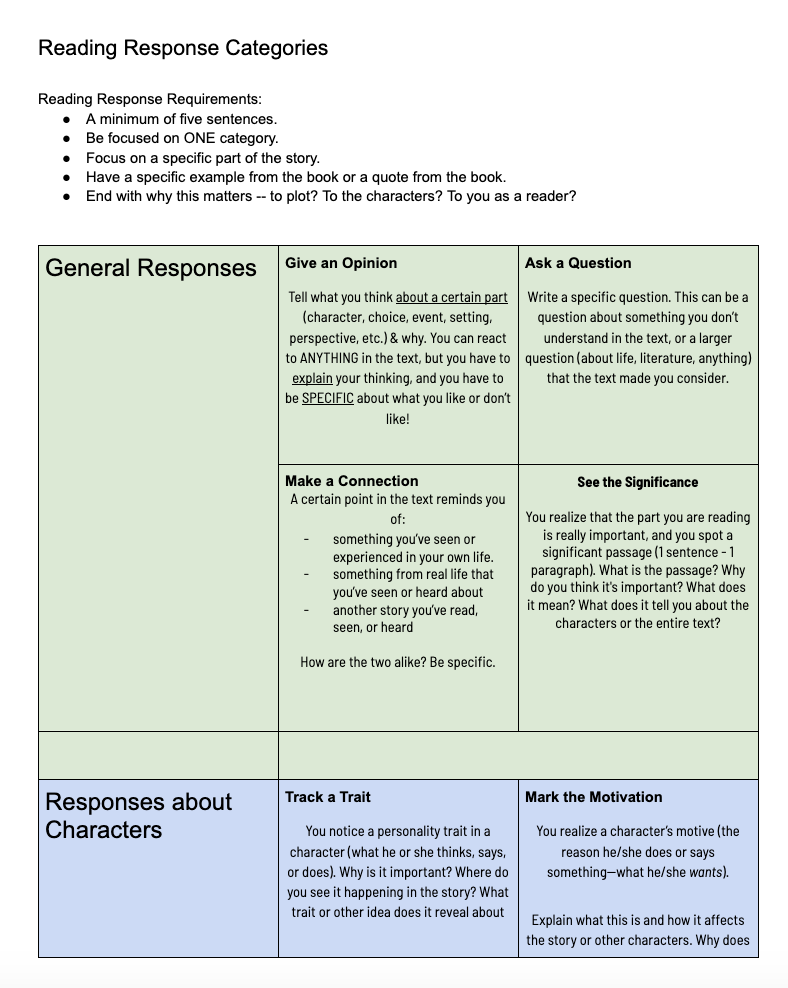
Reading Responses are literary analysis writ small. In just five sentences, students explore one original idea about a text, support it with text evidence, and consider its significance to the text as a whole. These are tiny and also challenging, and can range in topic from building connections to character analysis to Jungian analysis.
One of the best parts about getting your students into a reading response habit is that these little chunks of lit analysis can be mixed, matched, and combined into bigger pieces of literary analysis to create longer literary essays.
By teaching students to write small first, we can help them focus on learning transferable skills that will actually make their longer writing great. We can provide faster feedback on student writing when it starts small, ensuring that students are continuously growing and evolving as writers.
Share some ways your students “write small”! Let’s grow our list together in the comments or on Twitter @RebekahODell1 and @MovingWriters
 moving writers