
Mentor Text: a scar tells a story by Maggie Smith
Techniques:
- Connecting images and ideas
- Word choice
Background –
Sometimes my reading choices are influenced by my job. I read a lot of memoir anyway, but sometimes, when I flip through a book, I am deciding not just whether it is going to interest me, but whether it may bear fruit in my classroom. (And, with all honesty, for my sharing here.)
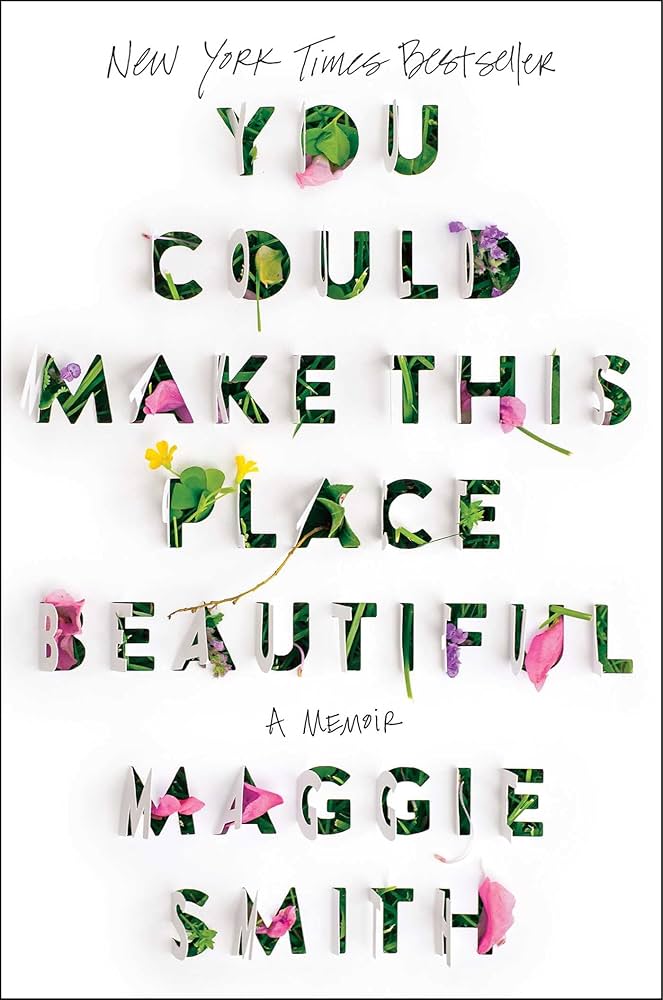
So, though I recognized Maggie Smith because of her poetry (though I’ve only really read that one poem a bunch of times) her memoir called to me. When I picked up a copy of it, and leafed through it at the bookstore, I knew I had to read it, and mostly because of the classroom potential.
In my Grade 12 course, I like giving students a lot of bite-sized memoir pieces to read and write beside. We compile a collection of “memoir cards” through out the course – note cards upon which we’ve done our own bite-sized pieces of writing. Smith’s You Could Make This Place Beautiful is a fine collection of pieces like this – little moments that work together to tell a larger story.
How we might use this text:
Connecting Images and Ideas – It’s a busy week, so I’m not taking the time to check, but I feel like I have a handful of mentor texts and prompts about scars. Maybe it’s a recency bias, but I feel like Smith’s is the best.
I like the brevity of it. She talks about only three scars, and if you look at it, spends the most time on one that isn’t even hers! Although we spend a lot of time telling students to expand moments, there’s something, I think, in encouraging them to work small. The variety might be nice when we see the piece as a whole.
It may be because scars are a relatively universal experience, but there’s some imagery there. We can picture the scars, and we know that scars have stories attached to them. (And although I titled this excerpt using that idea, it’s one of the pieces that exist outside of titled chapter status in the book.) Choosing three and telling the short version of the story works nicely.
And it’s entirely possible that this works simply as an inciting piece of writing for a larger piece telling one of those stories.
Word Choice – I love digging into the prose work of poets. Sometimes, they’re phrasing things so wonderfully. Maybe we just read it that way because we think of them as poets first. And maybe it’s where the brevity I enjoy comes in. This passage is a good way to show writers that you can load your words with resonance, using fewer to say more. (Am I going to start asking students how a poet might express the thing they’re trying to say? Probably.)
As I close up shop here at MTW this time around, I’m thinking that I didn’t get into something about digging into Smith’s memoir that really struck me. It’s a divorce memoir, and that’s a window into a world I’m not visiting as an adult. There’s something about having our writers look at pieces that are windows into worlds different than their own, and finding inspiration to express their own experiences and insights that I think is powerful. And, at the end of it all, the work of mentor texts is putting the best writing in front of our writers to guide and inspire them.
What other poets that have written wonderful prose do we need to explore? How many of us use “micro” mentor texts?
Leave a comment below or find me on Twitter @doodlinmunkyboy!
 moving writers
