
Mentor Text: The Word “Nice” from Heartbreak Is the National Anthem by Rob Sheffield
Techniques:
- Introduction
- Making connections to make an argument
Background –
I’ve probably shared this here before, because I’m pretty open about it, but I’m an insomniac.
I’m used to it, and often, it actually feels like an asset, because I have a couple more hours in the day to tear through my TBR and watchlists. And because I’ve got a pretty active TeacherBrain™, that means I’m often finding new ideas for classroom use.
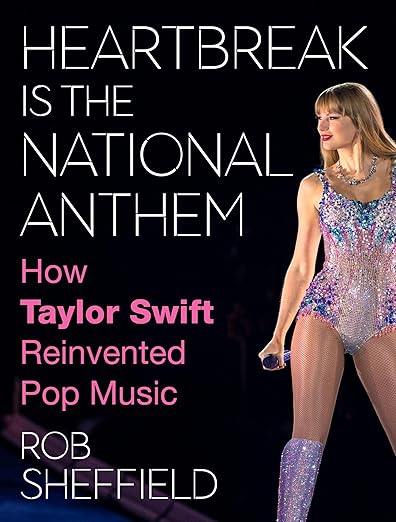
I kind of figured Rob Sheffield’s Taylor Swift book would make it into the classroom at some point. I’ve read a couple of his books, and a lot of his writing for Rolling Stone. He’s got such a phenomenal grasp of not just the subject at hand, but how that subject fits into the larger picture of pop music history.
I kind of figured that would happen in this book, giving me a good mentor text or two. (And also, love her or hate her, Swift inspires debate and discourse!)
How we might use this text:
Introduction – There are numerous pieces in this book of essays that showcase a good introduction. As a music journalist for one of the few remaining music magazines, it makes sense that he’s good with a hook.
First off, much like I encourage my writers to do, he’s identified a focus, discussing her use of the word nice. He notes instances where she’s used it, and the impact of them in her work. He notes, as well, that nice is also a part of her persona.
And he uses questions to drive this forward. In my classroom, when we’re doing analytical work, I tell my students that questions drive analysis. We want answers. Starting with a question, embedding questions throughout that first part of the essay demonstrates this. Those could be questions we’ve never considered, and now want some answers to.
It might actually behoove us to only give students the first part of this essay, focusing on the introductory techniques. They may assume that a much longer essay follows!
Making connections to make an argument – I’ve actually been thinking about this move a lot for my writers. In January, my Grade 12s wrote their provincial English exam. One of the criteria at the top of the rubric for the response questions was “ideas extend to a broader context.” A lot of our writers approach their topics with a pretty tight focus, sticking pretty tight to their core topic.
If Sheffield did this, then this essay would only talk about Taylor. And it wouldn’t be as good. As I said above, part of what makes Sheffield’s pieces so damn good is that he references the broader context of pop music history. That’s why the Springsteen comparison works here. It shows how stepping away from “nice” impacted his career, as we’ve seen happen to Swift, and numerous artists. It’s also a very pointed way of answering one of the big questions he posed in the introduction, as to whether or not Swift’s niceness is a result of gender norms and the expectations they create. Sometimes, our writers need to see they can reinforce their arguments by stepping outside of their topics to get a broader view.
Like I said earlier, a familiarity with a writer’s work helps you build your mentor text files. Knowing their voices, and the things they do well makes some of your choices easier. It’s especially important, I think, in our study of pop culture. These writers are discussing the things our students care about. The hope is that we can take their moves, and use them not just in our own looks at pop culture, but move them into literary analysis and other areas.
Any favourite writers that you count on to provide mentor text possibilities? Are there things you’ve seen in your students’ work that you’re hoping to find a mentor text to address?
Leave a comment below or find me on the socials as @doodlinmunkyboy.
 moving writers