

This summer during Camp Rewrite, I had an illuminating conversation with Utah teacher John Arthur. In his sixth grade classroom, he frames everything students do as “content creation”. After all, Arthur said, this is what every kid wants to be — a content creator. An influencer.
So, what would it look like if we reframed what kids do in a classroom as “content creation” that uses their learning to make conetnt?
I’ve been mulling this over for the last few weeks. I’m not completely sure how this might change what happens in my writing classroom. I’m envisioning a world in which we study the writing process together, but the product is open-ended. Or a world where students choose how to share their content — in writing? In a social media post? In a podcast episode? In a YouTube video?
While I’m not entirely sure what this might mean this year, there’s one change I am making from the get-go. I want to help kids deepen their wells of writing ideas.
Many writing teachers begin the year with having students generate writing ideas by creating heart maps a la Georgia Heard or listing writing territories a la Nancie Atwell. I have used and love both of these strategies. And I know I will pull these out again at some point during the year when our ideas have gotten stale and passions have changed. (After all, I teach middle school. Passions change by the minute.)
What Content Could You Create?
Here’s what I’m starting with this year, though, to help students start thinking about all the content they might create during this school year! I’m reframing the “what could you write about ” conversation to be a “what content might you create” conversation. It’ll be a fantastic warm-up and getting-to-know you conversation paired with this hexagonal thinking about identity.
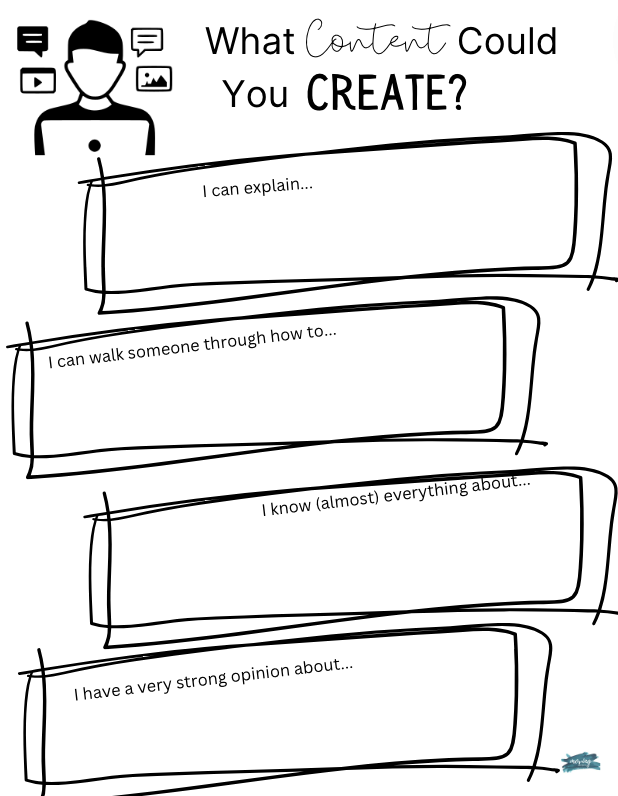
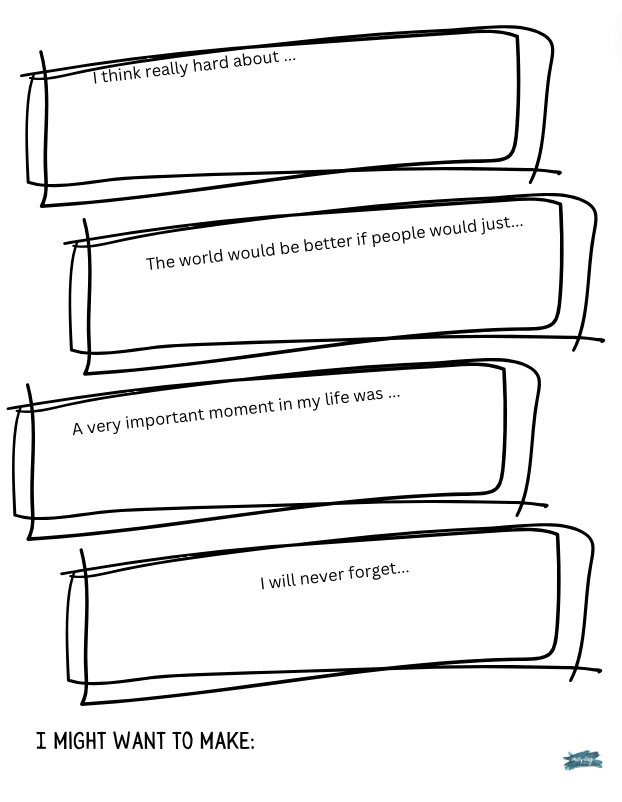
Download the handout!
Here’s what you might notice…
- This is a small shift, to be sure. It’s a reframing, really, of the kind of work we often do at the beginning of the year. But the way the questions are worded leverages existing student passion and expertise.
- At the bottom of page 2, you’ll see, “I might want to make…” Here I prompt students to think about the forms content can take. When they think of a content-creator, what kinds of content are they thinking about? Most likely multimedia products! And that’s great — let’s start thinking about that together? How might students be able to learn necessary skills and practice composition and great things that aren’t essays?
- You’ll notice the boxes take students through the modes without ever using mode terminology like “persuasive”, “arugmentative”, “narrative”, etc. I think our over-tested kids are also OVER these modes because they feel fake (even though we know they aren’t fake). Instead, using different purposes of writing as a way to have this same conversation is more helpful and expansive.
How to Use This Handout
My students glued these pages into their writers notebooks so they can refer to them (and, I hope, add to them) throughout the year! We are also talking about them a lot. Students shared ideas and potential “creations” with one another, and it’s a way I will begin talking to students immediately in writing conferences about their intentions for content creation this year!
Want more?
This learning experience is just one part of a larger writing unit (Introducing Students to the Writing Process) that I am sharing with paid members of the Moving Writers Community this month. This unit invites students to write about what they know well in the style of Mari Andrew while learning executive function strategies that will help them read and write all year long. The unit plan comes with all the materials you’ll need to adapt it to fit the needs of your learners!
We’d love to hear what YOU have to say about content creation and how you help students generate ideas for writing! Leave a comment on this post to join the conversation!
 moving writers