
Revision is the vegetable of the writing process.
And, as such, we have to build capacity for revision — like building capacity for eating broccoli — by finding ways to sneak it in.
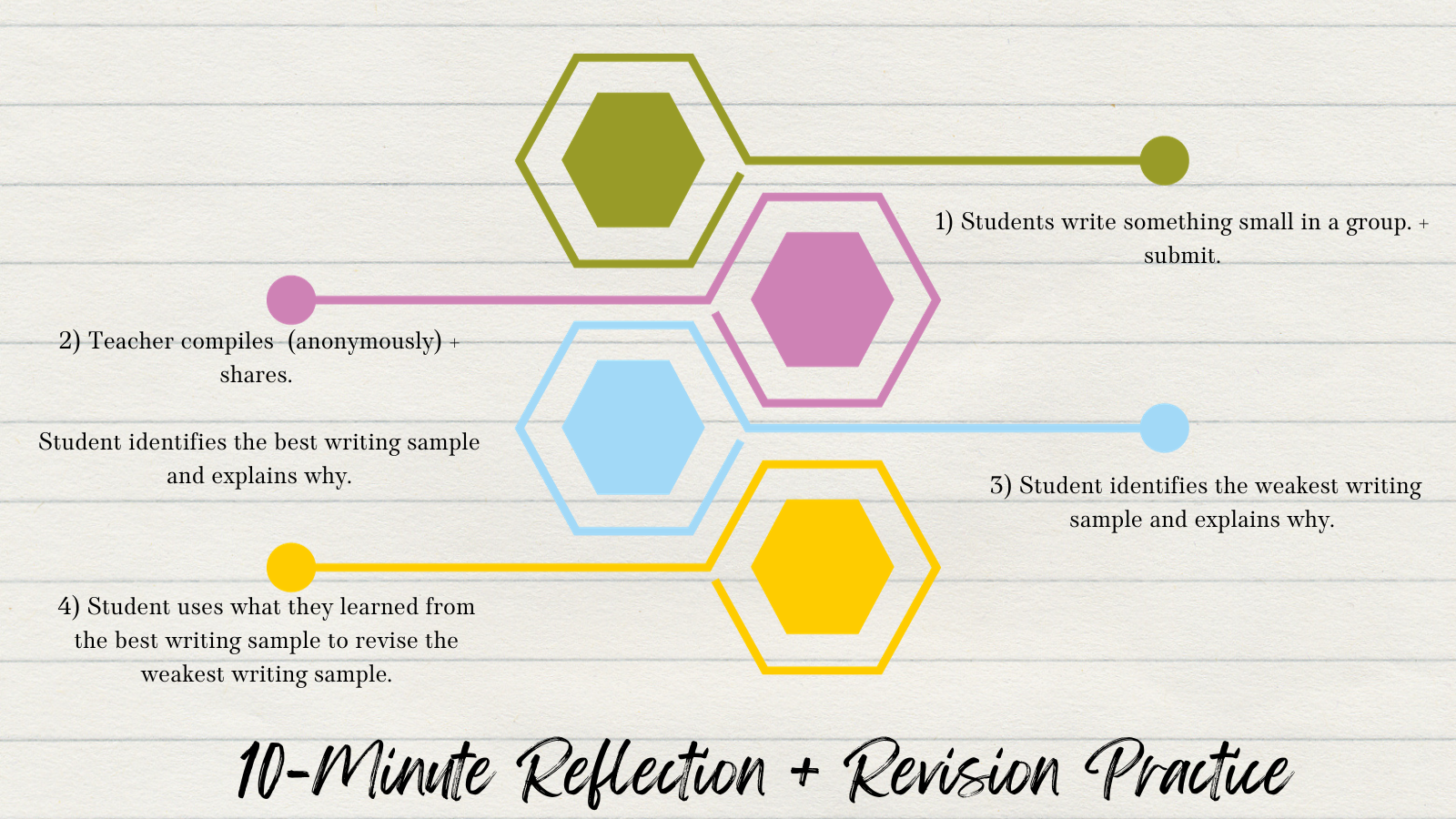
I’ve been doing this in quick 10-minute bursts this year that I call Reflection + Revision.
Here’s how it works:
- Students practice writing something small together in groups and turn it in. In the examples I’m sharing today, students practiced writing a reading response and writing a main idea statement. The key here is that both of these small writing samples are things that my students need to get better at over time, and having them practice in small groups is a friendly way to give them more exposure and experience with writing these things.
- I anonymously compile all the writing samples in a Google Doc and share it with the students. Mentor texts are so powerful because they show students what their writing could look like. They cast a vision. And sharing student writing — the good, the bad, and the ugly — has a similar effect. It shows students the difference between good writing and great writing. It shows them the difference between strong writing and underdeveloped writing. It demonstrates so much of what I want them to learn better than I could ever explain it to them.
- Students work individually to identify the strongest writing sample and explain why. The explaining why is the hard part here. Our students want to default to vague generalizations like “It uses good description” and “There are great details” and “It has a good flow”. Ask students to create a bulleted list of the specific things that jump out to them and make this writing sample different from the rest.
- Students work individually to identify the weakest writing sample and explain why. Okay! Now we have a point of comparison. Students now bullet what’s missing from the weakest response.
- Students use what they learned from the strongest response to revise the weakest response. Students respond better to the task of revision when they begin by revising someone else’s writing. Now, in some cases, students will be revising their own group’s writing if, in fact, they selected their own writing as the weakest sample. But, in general, student writers are less intimidated by making someone else’s work better. And they have a way to do it — by applying the bulleted list of strong writing traits they have already identified!
Here are two that I have used in my classes recently:


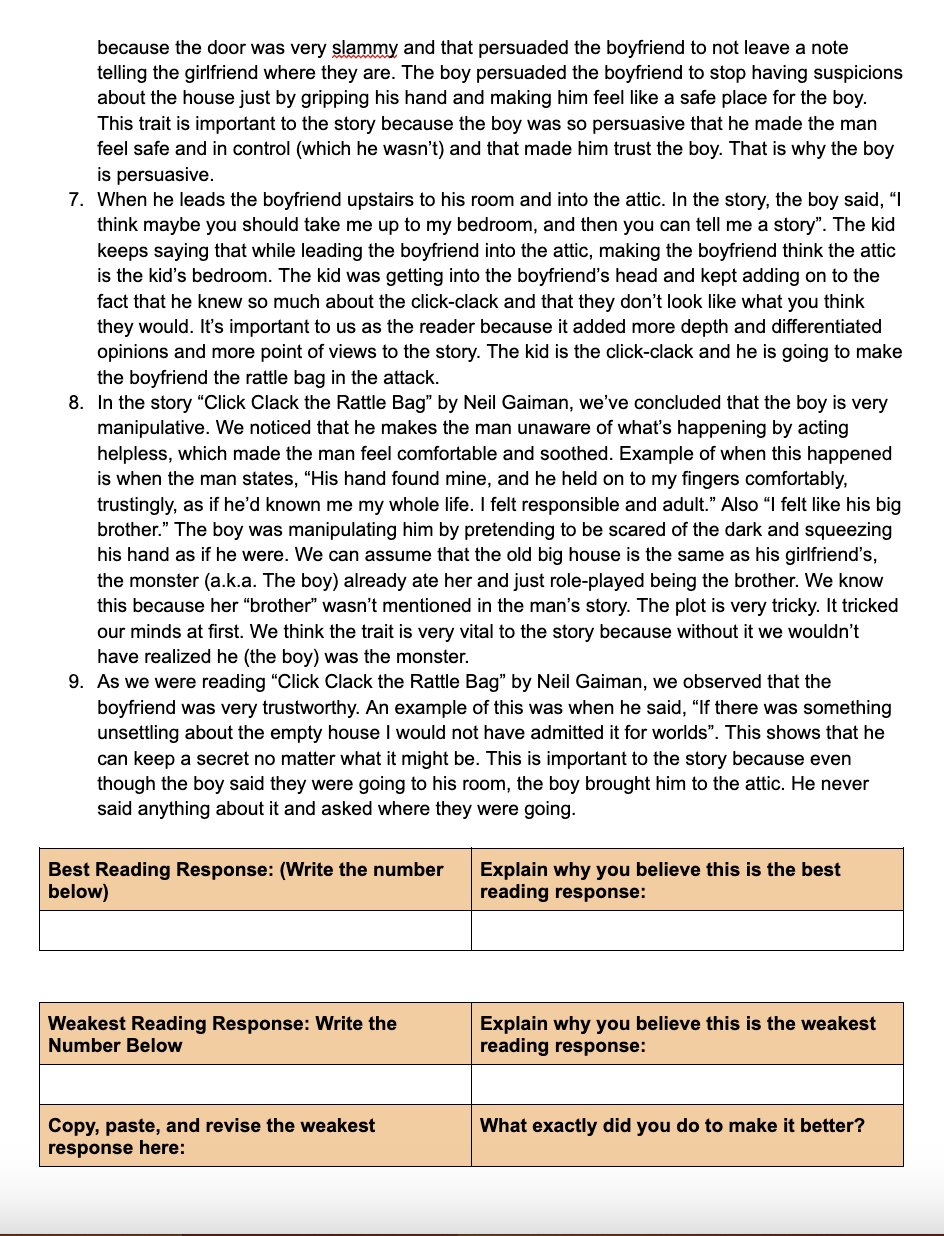
As a bonus, I have been taking the list of “Why This Piece is the Best” from each student and compiling it into a tip sheet they can refer to when they do the same kind of writing in the future:

How could you use this in your classroom? Practicing thesis statements? Practicing body paragraphs? Practicing explaining evidence? For me, the possibilities feel endless, and students are getting consistent practice thinking through and enacting revision.
 moving writers
I used this today, and the response was a game changer. Thank you!
This is fantastic! I am going to start implementing this strategy today.