
Mentor Text: The Giraffe from Vanishing Treasures by Katherine Rundell
Techniques:
- Research Essay
Background –
Daylight Savings Time and insomnia don’t work very well together. I feel like I’ve just gotten that part of my life halfway regulated.
Of course, it’s meant that I have a lot more time for reading. Combine that with the ease of borrowing books from the library digitally with a tool like Libby, and I’ve been reading pretty widely too.
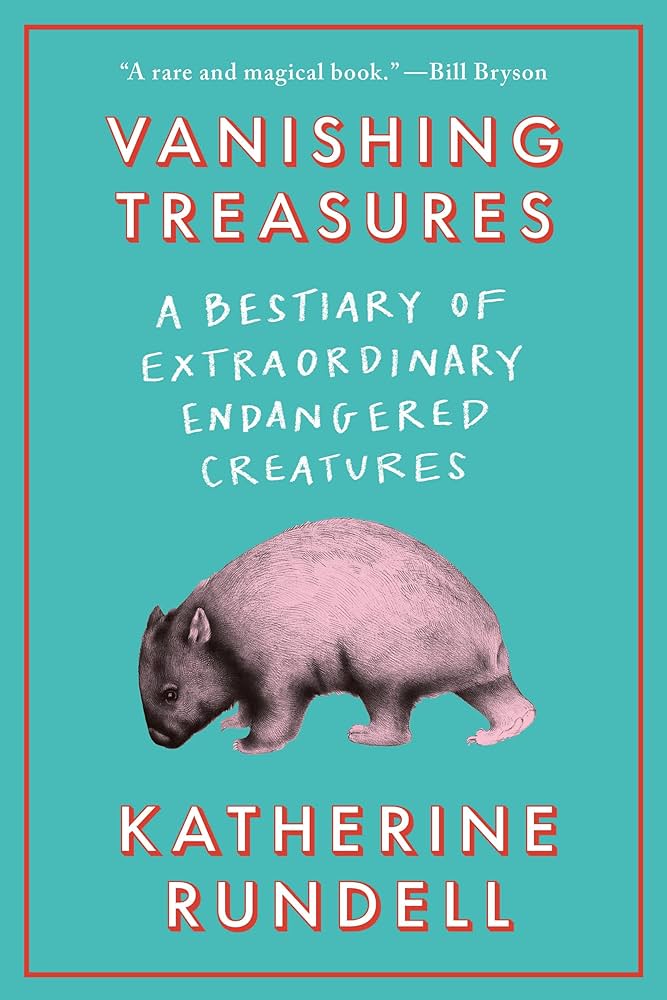
Vanishing Treasures by Katherine Rundell was a fascinating read. It was an impulse borrow, which I love libraries for. I thought it looked interesting, maybe something my girls would enjoy. They may, but it rubbed up against a little problem of practice too.
A new teacher in my department has expressed a couple of time that finding ways to infuse learning from Science into English class’s work is challenging. Though the concept makes a level of sense, the actual doing it isn’t as obvious for her. We’ve discussed it, and it’s been rolling around in my head. I love a planning challenge.
The essays in Vanishing Treasures, where Rundell explores the facts and stories behind endangered species may be a way into this work for my colleague, and therefore, something I’m sharing with you too.
How we might use this text:
Research Essay – In my classes, we’ve been playing with making this kind of writing more engaging. We teach research skills. We look at mentor texts, and play with different ways to express our learning. These essays fit nicely into that stack.
In our research skills development, I have students working with focus questions. We highlight the things that jump out to us, that are interesting and engaging. We’ve worked on highlighting these things as we write. Rundell shows that nicely. The stories of the giraffe gifted to Charles X are fascinating. Looking at the subject being studied scientifically using stories from the “real world” that are interesting adds a level.
I also love how Rundell explores the question of what exactly a giraffe is. This is where she digs into the science of giraffes. It’s not necessarily hard science, but I think, in an English classroom, there’s something in exploring ideas around the science, not simply expressing the facts without passion. (Though I love that academic writing is starting to skew towards creativity over basic statement of facts and ideas.) This is the kind of question I push students to explore in their focus questions, and to have some fun when they express their findings.
As well, I’m always on the lookout for pieces that have good introductions and conclusions. The texts and stories that she came across while learning about giraffes serve as wonderful bookends to this piece. Saving the end of the story of Charles X’s giraffe for the conclusion is impactful, as it leads to the “lingering” question she leaves us with – an effective conclusion strategy.
Sometimes, our work in an English classroom is guided by the search – the texts and strategies we haven’t found yet that will solve a problem for us, or open up new possibilities for our students. I love finding, and sharing those things with my teacher community.
What other mentor texts are out there for writing about science? What other things that aren’t obvious how to write about do we need to explore?
Leave a comment below or find me on Twitter @doodlinmunkyboy!
 moving writers