
Mentor Text: ‘Vagrants and Loiterers’ by Kwame Davis
Techniques:
- Imagery
- Writing from life
Background –
Though I prefer the physical book in my hand as I read, the ease of the digital text means I find myself reading them more. I’m in my Libby account almost daily, just in case something new has been added.
A couple of weeks ago, one of my libraries added a few volumes to their poetry collection, which is more rare than I’d like it to be. (And, if we’re looking for a time-saving teacher tip, a screen grab is much easier than a trip to the photocopier. Especially if you’ve found the perfect poem for a class while you were reading at 3 am.)
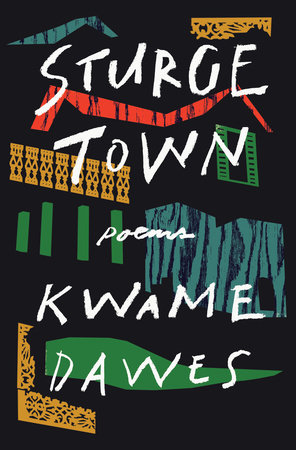
Kwame Davis’ Sturge Town was one of those texts. Davis, the poet laureate of Jamaica, offers wonderful poems that explore many themes and ideas, evoking not just that country, but many elements of the human experience. It took me a few minutes of reflection today to decide which of the poems I flagged I’d share with you, and I’d be lying if my predilection for fixating on certain words, like “vagrant,” wasn’t a deciding factor.
How we might use this text:
Imagery – Planning a course for the second semester, I found myself reflecting on elements of first semester’s courses. With a provincial exam that serves as the final for our Grade 12 English courses here, part of that reflection is deciding what elements we need to tweak to give students their best chances for success in that exam. Working with visuals and effectively using imagery feels important right now. We’ve rolled in weekly ekphrastic writing experiments to build this.
With that in mind, ‘Vagrants and Loiterers’ feels like a perfect mentor text. Though it’s not identified as such, it really feels as if it could be an ekphrastic poem. It feels as if Davis has the photo of this dapper gentleman in front of him. Even though this may not be the case, and such a photo may not even exist, we can likely picture it via Davis’ imagery.
He also does that wonderful thing where he not only describes elements of the image, but he imbues them with meaning. The nice clothes imply intent, and possibly character. The watch becomes more than a timepiece, but a connection to a deeper understanding. The imagery not only allows us to draw conclusions, but to engage other sensory elements, such as the statement about the weather.
Writing from life – And if this isn’t a purely ekphrastic poem in the sense that Davis is writing from a visual image, the life in the poem tells us it is possibly an effort to capture something. It feels like maybe it’s like that game we play when we’re people watching, when we build the backstory of the people we see.
It feels like Davis may be remembering someone he saw, maybe even someone he knows. This could be an fun exercise for our writers as well – writing about someone they know, but as the speaker of the poet, writing with a tiny bit of distance, supposing instead of knowing. Having them present what they know about their subject as if they didn’t know them intimately could yield interesting results.
I know I feature poetry frequently here, but I really do feel it has so much potential as a mentor text. Yes, we can guide our young poets with good poetry. But we can also show them ways to express themselves well. How often do we describe great prose as poetic? Pieces like this might help our writers achieve that!
What ekphrastic, or ekphrastic adjacent, pieces have you had success with? What about imagery heavy pieces?
Leave a comment below or find me on the socials as @doodlinmunkyboy.
 moving writers