You can hardly get online recently without seeing an article or other hand-wringing about ChatGPT and what this means for the world. Especially the English teacher world. Thankfully, Brett Vogelsinger has done some thinking about this. Instead of fighting against it, what if we could use ChatGPT and other AI to actually benefit our writers? […]
Category: Professional Development
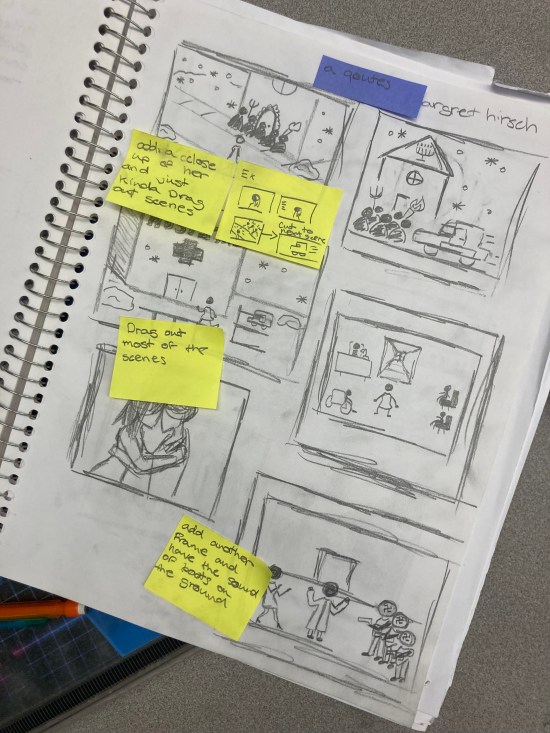
Writing You Can See: How to Teach a Graphic Novel Writing Workshop
I’m rarely brave enough to try a terrifying new teaching idea on my own. Ask Allison. Or, these days, Sam. For years, I’ve been trying to psych myself up to teach a writing study on graphic novels or graphic essays, but because I am so woefully inept in the artistic realm, I never did it. […]
How Can I Help My Students Dig Deeper into Mentor Texts?
We get different versions of this question, a lot: “I love mentor texts. I totally see why they are beneficial. But my students are struggling to notice craft in them.” or “My students have gotten pretty good at noticing surface-level craft moves, but after they’ve noticed one or two things — they’re done. How do […]
October Webinars with Moving Writers
Students + teachers alike benefit from predictable patterns of learning: routines and structures that allow all of us to be fully present in the classroom. But there are so many good things in reading workshop and writing workshop — is there a way to do them all and still have a predictable pattern of learning? How do […]
First Writing Moves of the School Year
In this summer’s beat Abigail takes you through two strategies that you can discover in Liz Prather’s new book “The Confidence to Write”… two strategies to start the school year off right and a great starting place for teacher growth this summer.
An Alternate Script for the Embarrassed Self
I’m very happy that my idea of creating Embarrassment Free Zones resonated with many teachers and students. My goal in this post is to establish that there are situations when Free Zones won’t work. Yes, that’s right.
A Conversation that Nudges Students out of Embarrassment
If you’ve ever taught a bunch of self-conscious middle schoolers, you know that adolescents are perpetually embarrassed about anything and everything. You also know that they don’t just “get over it” when they realize that embarrassment is an impediment to their learning. In that state of biological and emotional upheaval, the rational voice (even when it exists) is drowned in the fear of embarrassment.
We are BURSTING with New Synchronous Virtual Learning Opportunities!
We are adding EVEN MORE opportunities for live, virtual professional development this spring! We hope that you’ll join us for one or more of these sessions! March 5 Poetry Pauses to Rouse Your Writers Next Week Brief “poetry pauses” not only build students’ capacity for critical reading + stamina for writing, but they can also […]
Facilitating Student Learning by Helping them Overcome Embarrassment
Most struggling students have found themselves failing, and many of these experiences of failure become foundations to future embarrassment. This, then, becomes a huge deterrent to learning when the student begins to default to maladaptive coping mechanisms that serve them at the moment but are detrimental in the long term.
Spring Professional Development with Moving Writers
We’d love to see you this spring for live webinars (recorded if you can’t make it!) Here’s what we’re offering so far in March and April! Just in time to fill your plan book for National Poetry Month, brief “poetry pauses” not only build students’ capacity for critical reading + stamina for writing, but they […]