
Mentor Text: ‘Younger Sister, Going Swimming’ by Margaret Atwood
Techniques:
- Imagery
- Using Parentheses in Poetry
Background –
I’m writing this on the Monday of our Spring Break, which was actually extended by a snowstorm on Friday. I’m kind of hoping this will be the only time this week that I sneak into work mode, because I looked ahead in my calendar for April, and there’s a solid week in there that is very, very full. I need to make the most of the break to be ready for that.
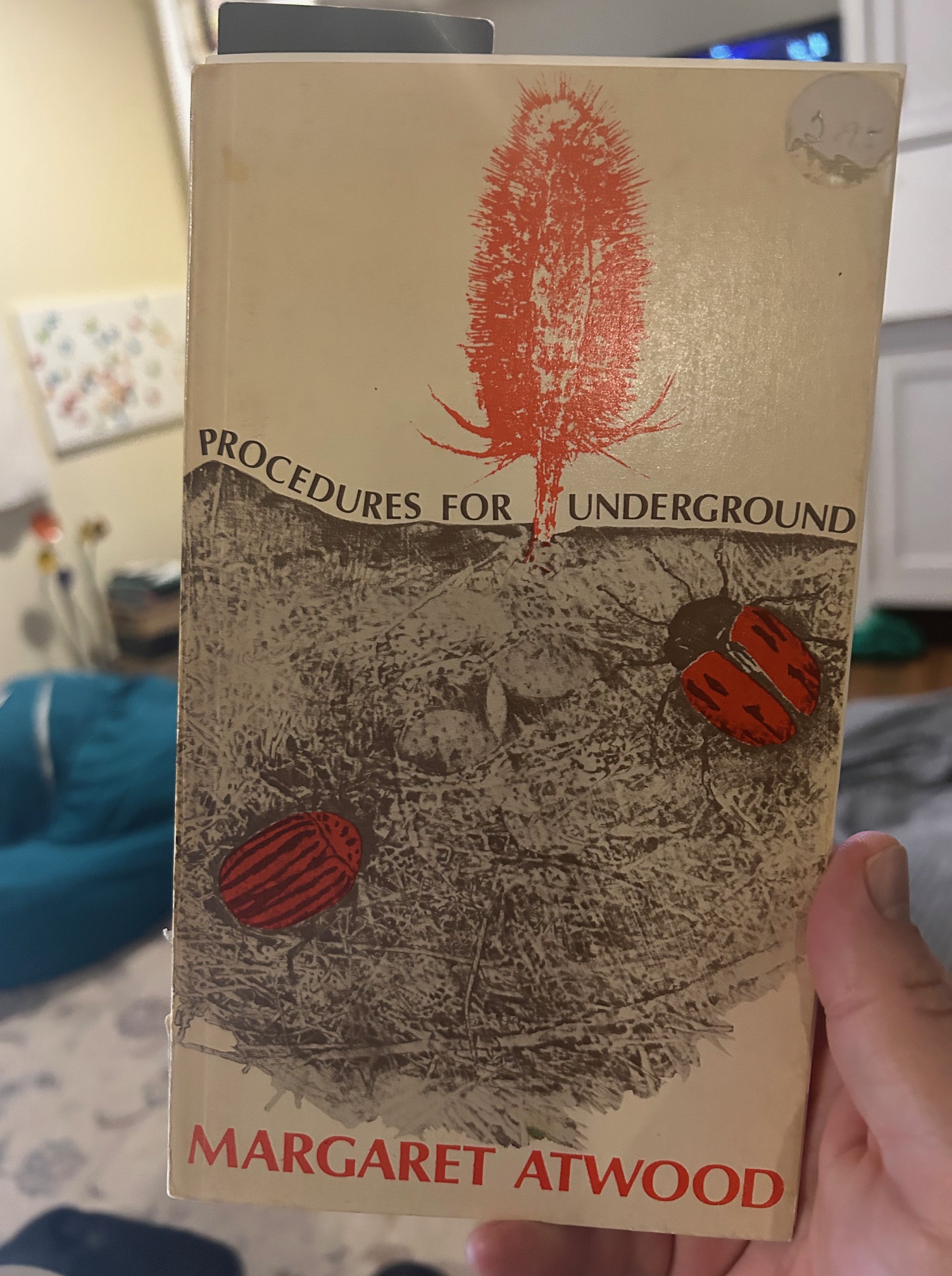
I’m doing pretty good at that, and have spent a fair amount of time with my nose in a book. Today, I finished the copy of Margret Atwood’s Procedures for Underground that I found last summer. I think because we love Atwood’s prose so much, it’s easy to forget her strength as a poet. I’ve got a nice little list of poems from this 1970(!) collection that will be making their way to my classroom.
So let’s start off April, Poetry Month, no less, with a poetry mentor text.
How we might use this text:
Imagery – I’ve been giving the students in my Lit class ekphrastic writing prompts weekly this semester. In the Provincial Exam they have to write in Grade 12, my students have to do a writing piece. I think ekphrastic writing will benefit them, as there are visuals in the test materials, so practicing writing from visuals may pay off later.
There are a number of poems in this Atwood collection that would work. I chose ‘Younger Sister, Going Swimming’ because the familial relationships at play in it might connect for our writers.
Though I really like that it evokes the sense of sound, not just the visual, it’s the sense of movement that comes into play early in this poem that I adore. Often, young writers’ ekphrastic writing feels very static, describing the image as it is, unmoving. By adding the sense of movement, this is no longer a photo, but a memory. (Of course, this poem may very well not be inspired by an image, but I can see using something from their camera roll to inspire a similar piece.)
Imagery can be communicated through beautifully used language, and Atwood shows this. “The lake heals itself quietly/of the wound left by the diver./The air quakes and is still.” so craftfully paints a picture of the moments after a swimmer dives into the water. I love the challenge that it throws to our writers, describing a moment using their words to the best of their abilities.
Using Parentheses in Poetry – I love when parentheses are used in poetry like Atwood does here. She uses them like a poet should, to expand the poem, giving context, or other information. In this instance, she’s inserting herself into the poem about her sister, twice explaining what she’s doing as her sister goes swimming. What’s especially wonderful is the contrast this creates – the sound, movement and action of the younger sister and the still, quietly writing older sister.
Spending time with Atwood’s poetry the last couple of days reminds me of one of the core tenets of working with mentor texts – our writers learn craft by writing alongside the work of great writers. We bring out their best by showing them the best.
What writing activities are first and foremost in your planning lately? Who are the great writers that you love putting in front of your writers?
Leave a comment below or find me on the socials as @doodlinmunkyboy.
 moving writers
[like] Kristie Leyba reacted to your message:
Thank you so much for this – I love poetry and always appreciate finding new things !Best,Hope Sent from my iPhone