Scaffolds for Helping Students Read Like Writer, Part III (Theorizing about Craft)

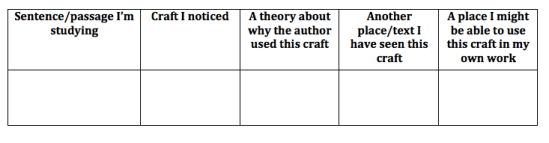
(Before diving in to today’s post, be sure to read the first and second posts in this four-post series about noticing and naming craft.) As we move deeper into the process of reading like a writer, we climb higher and higher on Bloom’s pyramid. After we notice and name craft, it’s time to consider why […]
I Get Wise with a Little Pop From My Friends

I want my students to be continually thinking about context–cultural, historical, and otherwise.  For many of my students, the boundaries of their writing AND reading are constricted by their narrow contextual pools of knowledge.  Helping them to see why the narratives of their history classes or the view through the microscope in biology are actually […]

Making Research Relevant: Teaching Students to Synthesize Evidence

Every time I go to a workshop about research writing and synthesis (and I’ve been to a few since I teach both AP Language and AP Seminar), we talk about making smoothies or chocolate chip cookies or chili. In every instance–much to my disappointment– we’re not talking about eating, we’re talking about blending evidence effectively. […]

Life Happens: “What to Do When You Don’t Have What You Need”

There’s a John Lennon song that addresses an issue that teachers know all too well: “Life is what happens to you when you’re busy making [lesson] plans.” Even the most responsive and differentiated approaches can fall victim to the different kinds of chaos that life throws our way (Technology, I’m talking to you). On top […]

Scaffolds for Helping Students Read Like Writers, Part II (Naming Craft)

Last week I began a series on scaffolds for helping students read like writers. To read like a writer is to appreciate what another writer has made while exploring possibilities for your own work. When students are surrounded by excellent writing and have been taught how to mine that writing for craft, their writing toolbox […]

Wait! 1 Book Recommendation and 4 Productive Pauses for the Problem-solving Teacher

Image via publicdomainpictures.net Let’s face it: no matter how well we run our reading and writing workshops, there are about a hundred different points in any given class period where problems can crop up. There’s no such thing as a perfect lesson plan, and as a result, teachers have to be decision making machines on a […]